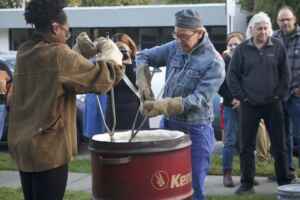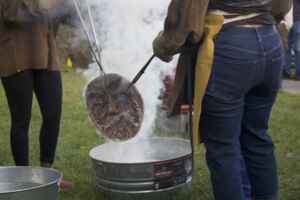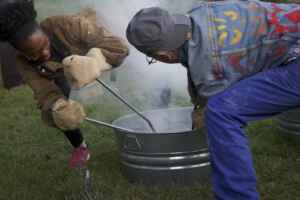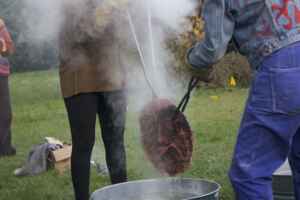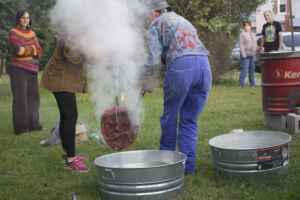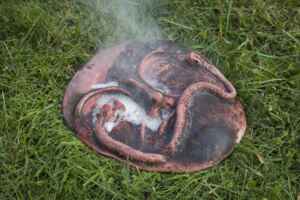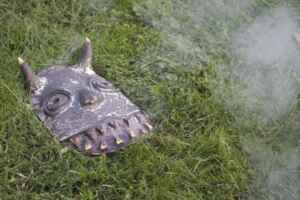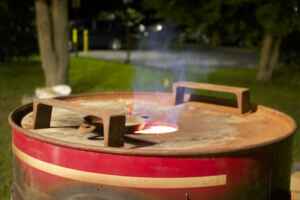
The Obvara firing process, which originated in Eastern Europe around the 12th Century, involves scalding the finish on the pottery to seal the porous surface. Similar to the raku pottery process, a bisqued pot is heated, in this case to 1650°F (899°C) and removed from the heat. The difference is that the pot is then dipped into a specific obvara yeast mixture before being dunked in water to rapidly cool the piece. The effects are quite stunning.
About the Process
The Obvara firing process is a dramatic and centuries-old ceramic technique that originated in Eastern Europe around the 12th century. Like Raku firing, it involves removing pottery from the kiln while it’s red-hot—but what happens next is what makes Obvara unique.
The heart of the Obvara process is the fermented yeast mixture. Warm water is combined with flour, yeast, and a small amount of sugar, then left to ferment for several days. When the mixture becomes bubbly and active, it’s ready.
The bisqued pots are reheated in the kiln to 1650°F or roughly 900°C. When the pottery reaches temperature, it’s swiftly removed from the kiln—glowing hot. The work is immediately dipped into the fermented Obvara mixture. The intense heat causes the mixture to scorch instantly, erupting with flames, steam, and smoke. This reaction seals the surface and creates bold, organic patterns – each one completely unique.
To lock in the surface effects, the pottery is plunged into water and rapidly cooled. This quenching step freezes the markings created by the scorching mixture. The result is a dramatic, tactile finish – rich with earthy colors, movement, and unpredictable beauty. No two Obvara pieces are ever the same, making each one a true collaboration between fire, fermentation, and chance.