

On April 20, 2026, the global fashion and film worlds collided at Lincoln Center, where the highly anticipated premiere of The Devil Wears Prada 2 unfolded in a dazzling display of couture, celebrity, and cultural influence. The star-studded event was livestreamed worldwide and attended by icons like Meryl Streep, Anne Hathaway, and Emily Blunt. The night marked not only a cinematic milestone, but also an extraordinary moment for Baltimore’s own artistic community.
Among the evening’s standout moments was the appearance of Utica Queen, who graced the red carpet adorned in ceramic artwork by Baltimore Clayworks’ 2025–26 Lormina Salter Fellow, Brady Fanning. In a space typically dominated by legacy fashion houses and global luxury brands, Fanning’s work offered something distinct: a bold intersection of contemporary ceramics, wearable art, and identity-driven design.
The Devil Wears Prada franchise has long been synonymous with high fashion, making its sequel premiere one of the most closely watched style events of the year. The red carpet featured looks from powerhouse designers like Louis Vuitton, Givenchy, and Prada (of course), reinforcing the film’s enduring influence on global fashion culture.
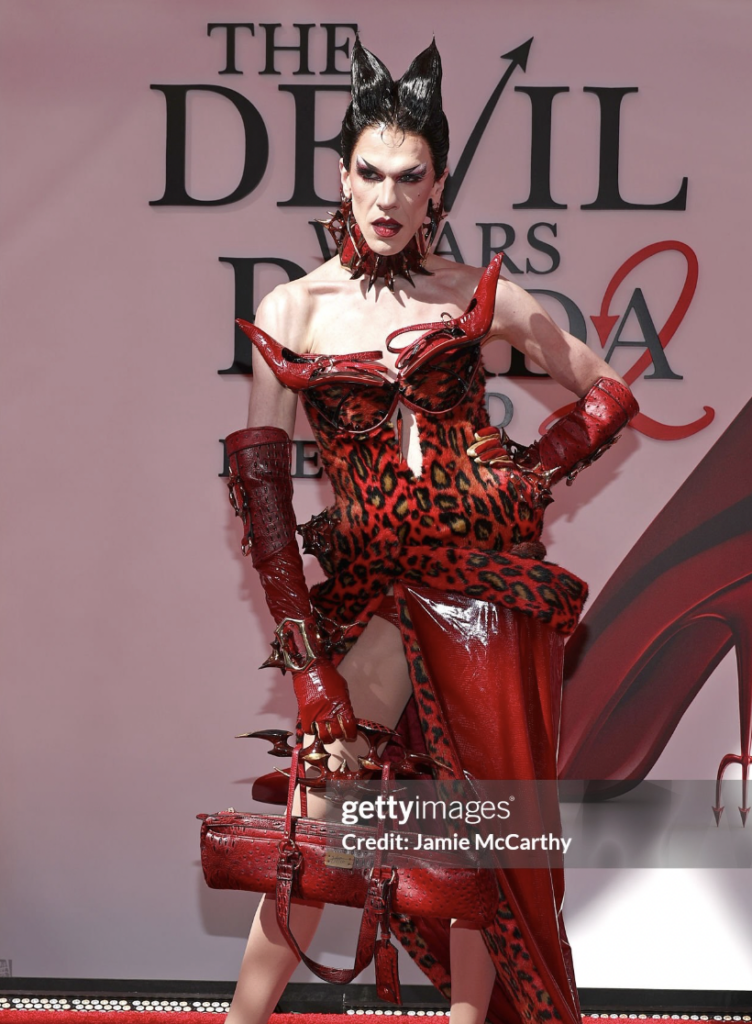
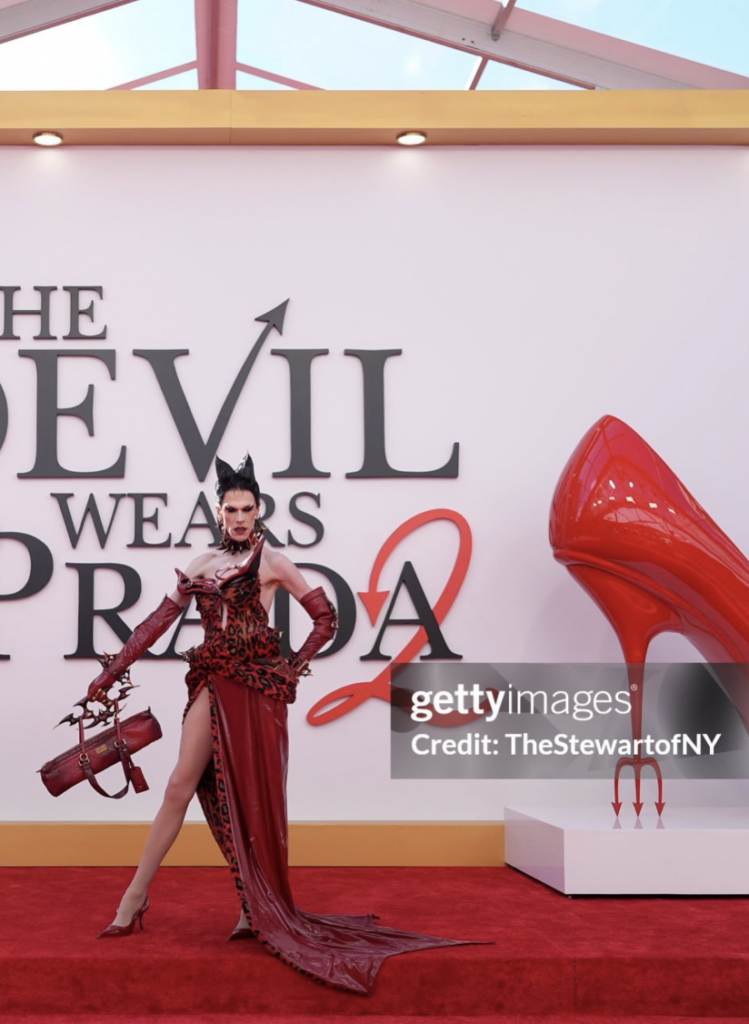
Utica Queen attending the world premiere of The Devil Wears Prada 2 at Lincoln Center in New York, New York on April 20, 2026. Photos by Jamie McCarthy/Getty Images for 20th Century Studios
Against this backdrop, Fanning’s ceramic work stood out not just for its materiality, but for its narrative. Ceramics, often associated with functional or gallery-based objects, were transformed into sculptural adornment; challenging expectations of what belongs on a red carpet. The presence of clay in this context was both unexpected and powerful, signaling a broader shift toward interdisciplinary and boundary-pushing design.
Utica Queen’s choice to wear Fanning’s work was itself a powerful act of visibility. Red carpets are not just about fashion, they are platforms for storytelling, identity, and cultural expression. By choosing ceramic adornment created by a Baltimore-based artist, the look became a collaboration that bridged performance, craft, and personal narrative. This moment also speaks to a growing movement in fashion and art that values authenticity, craftsmanship, and meaning over mass production. In a world increasingly driven by fast trends, Fanning’s work offers a counterpoint: intentional, tactile, and deeply human.
For Baltimore Clayworks, this moment represents more than individual recognition – it’s a testament to the organization’s commitment to supporting artists who are redefining the field of ceramics. The Lormina Salter Fellowship, which supports emerging and mid-career artists, has long been a catalyst for innovation. Fanning’s red carpet debut exemplifies the kind of ambitious, cross-sector work the fellowship makes possible.
Baltimore has always been a city rich in artistic talent, but moments like this elevate that talent onto an international stage. Seeing work developed within the Baltimore Clayworks community showcased at one of the most glamorous events this season underscores the organization’s impact not just locally, but globally.





Images courtesy of Eric Magnussen