
- This event has passed.
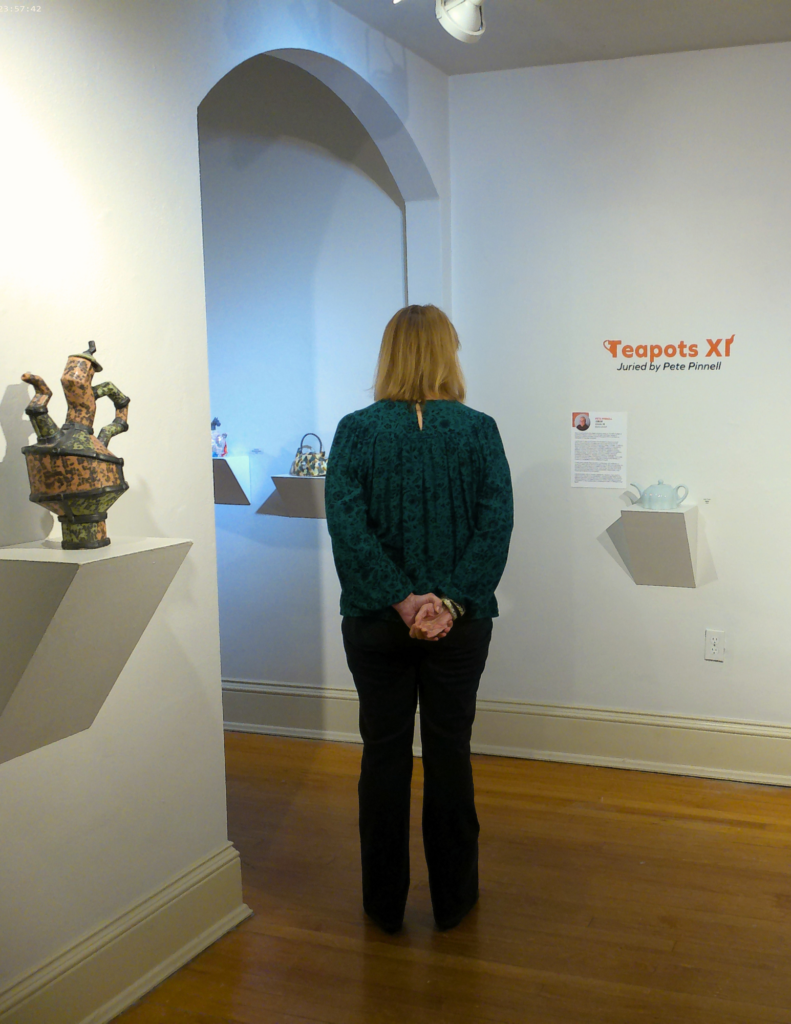
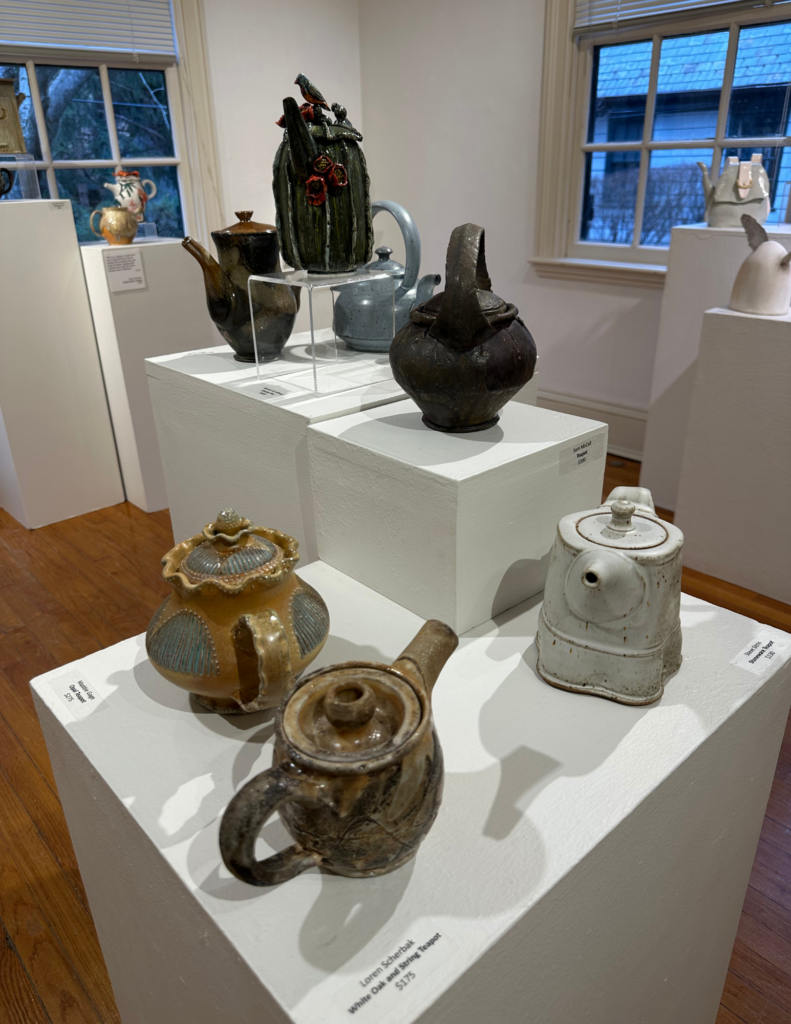
Teapots XI
January 10 @ 10:00 am – March 7 @ 5:00 pm
Juried by Pete Pinnell
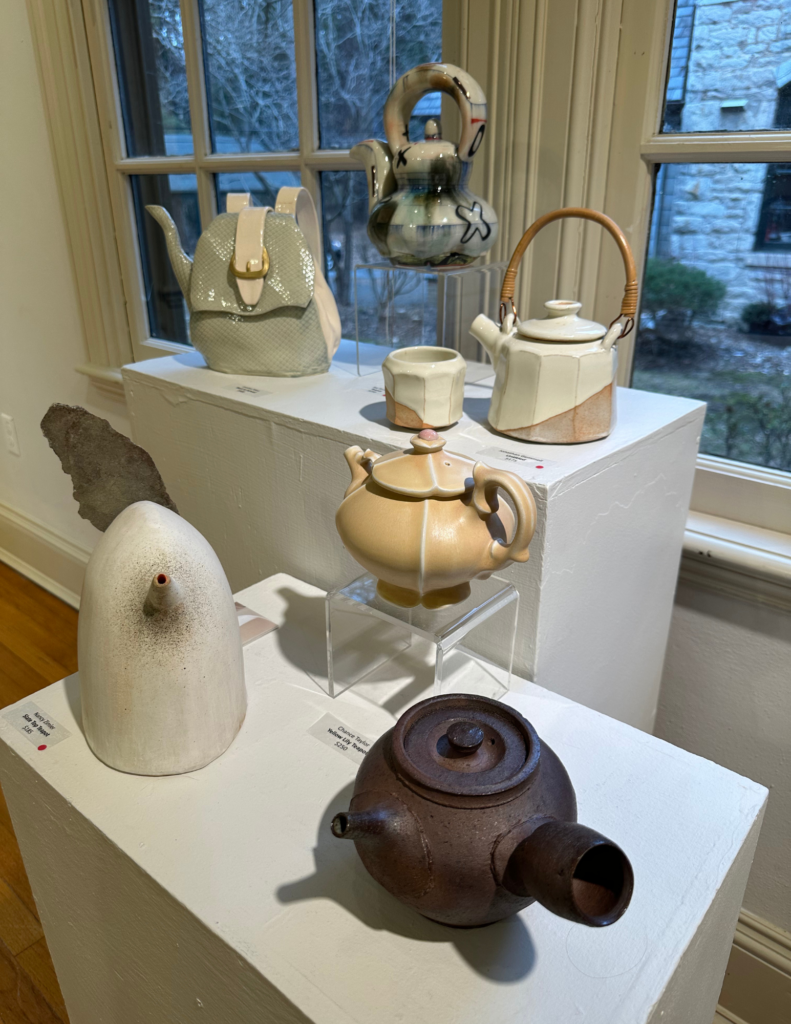
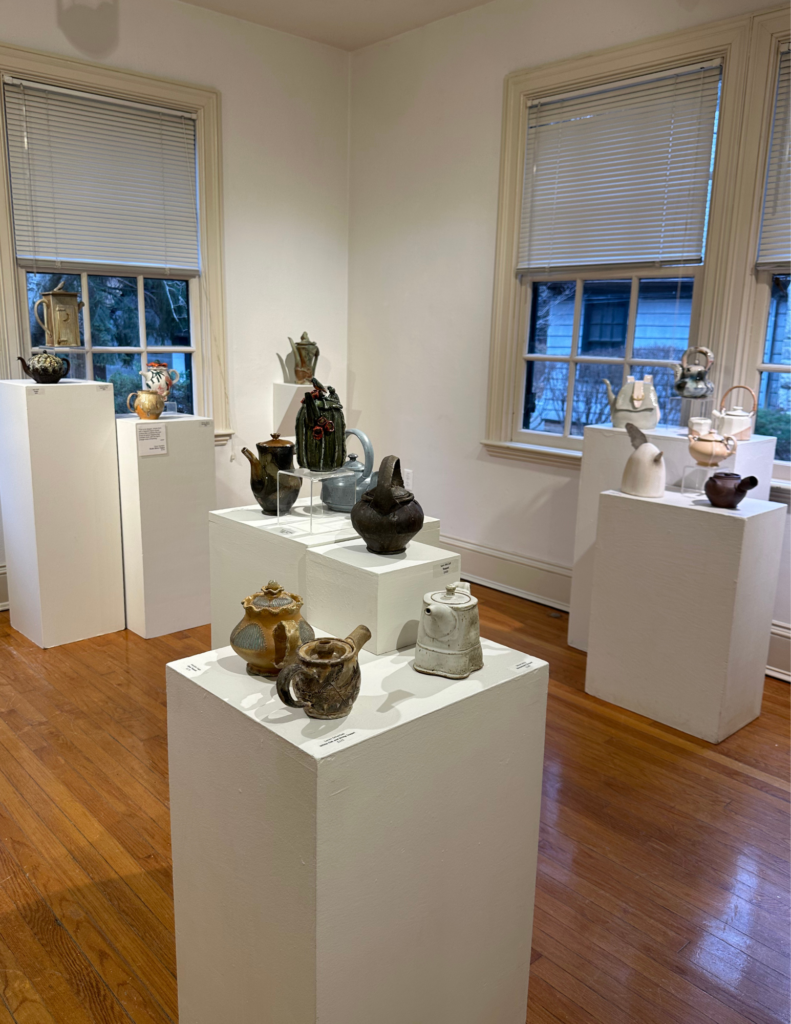
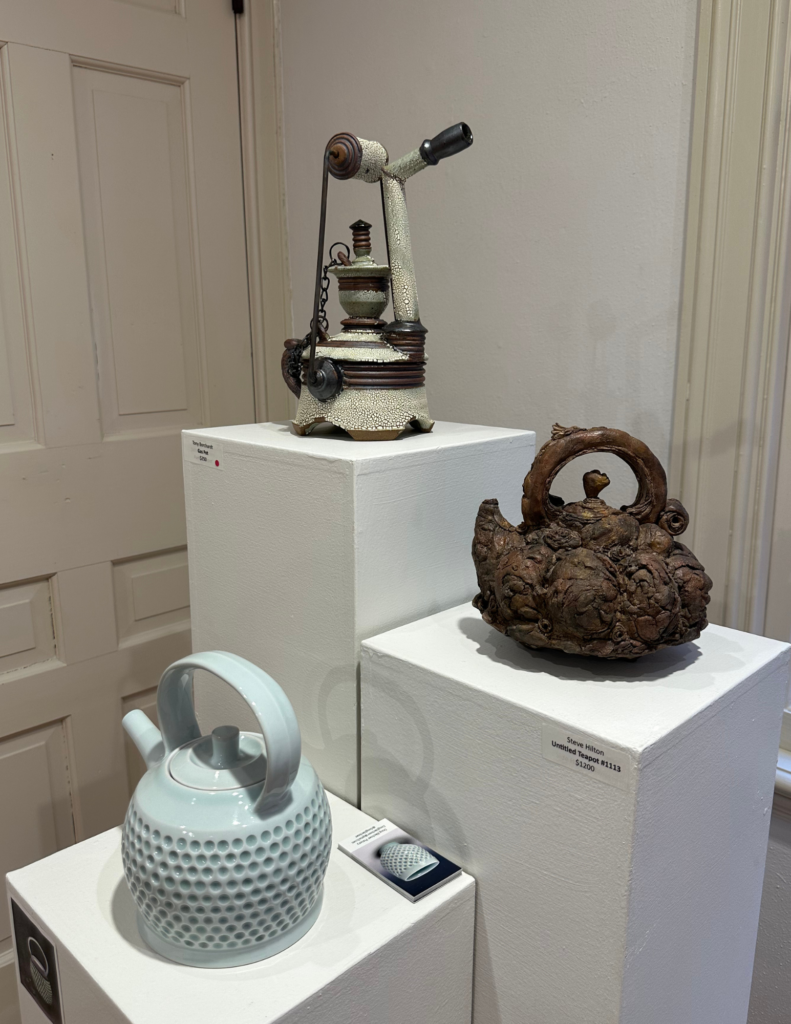
Baltimore Clayworks proudly presents our 11th biannual juried exhibition, Teapots XI. The juror, Pete Pinnell, selected the functional and sculptural teapots created by emerging and established artists.
Participating Artists
Normandy Alden, Norah Amstutz, Christopher Auyeung, Andy Bissonnette, Doug Blechner, Tony Borchardt, Kai Brisk, Ray Brown, Marin Carr-Quimet, Neil Celani, Connie Christensen, Autumn Cipala, Daisy Coffey, Ed Colahan, Jim Connell, Kevin Corotis, Dana Lehrer Danze, Dehmie Dehmlow, Scott Dooley, Cesar Duarte, David Eichelberger, Beverly Fetterman, Madeline Gage, Julann Gebbie, Tina Gebhart, Jonathan Gemmell, Seth Green, PJ Hargraves, Drew Herstam, Matt Hiller, Steve Hilton, Car Audette Holt, Ellen Horovitz, Walter Hyleck, Sooyeon Kim, Robert Kokenyesi, Owen Laurion, Darby Lewis, Brenda Llewellyn, Rebecca Lowery, Quinn Maher, Karin Marcus, Colin Martin, Sam McCall, William McKinney, Charlotte Middleton, Brian Morgenlander, David Newquist, Drew Ollero, Eric Ordway, Heather Ossandon, Carrie Anne Parks, Sarah B. Peters, Lori Piecyk, Pete Pinnell, Michael Poness, Kathryn Powell, Constance Rankin, Nicole Sandberg, Loren Scherbak, Sean Scott, Penny L Shearer, Cynthia Siegel, Taylor Sijan, Steven Sitrin, TR Steiner, Rebecca Stevens, Zach Tate, Chance Taylor, Manasi Vaidya, Marina Wahbeh, Jason Wang, Yukiko Watanabe, Leathia West, Mat Wheeler, Delanie Kabrick Wise, Nancy Zimler
About the Juror
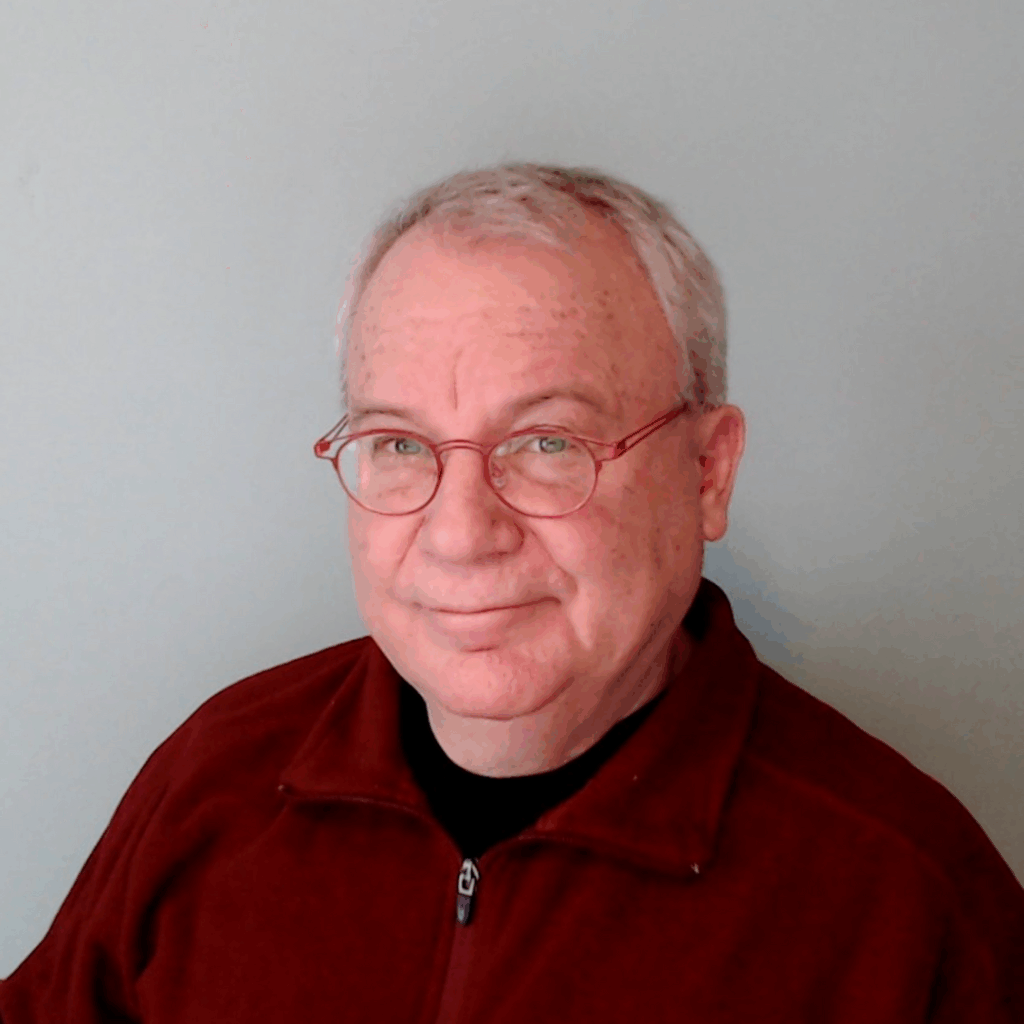
Peter Pinnell earned a BA degree studying music at Columbia College in Columbia, Missouri, a BFA in art at the New York State College of Ceramics at Alfred University (Alfred, NY) and an MFA in Art from the University of Colorado at Boulder.
For the first 12 years of his career Pinnell made his living as a studio potter. During this time, he taught part-time at the Kansas City Art Institute and at Johnson County Community College in Kansas.
In 1995 he joined the faculty at the University of Nebraska- Lincoln. In the ensuing years, he and his colleagues built a nationally recognized ceramics program: US News & World Report ranks the UNL graduate ceramics program as one of the top ten in the country. In addition to his teaching, he exhibits widely, and his artwork is found in notable collections, including the Frederick R. Weisman Art Museum, in Minneapolis, Minnesota and the Sheldon Art Museum in Lincoln, Nebraska. From 2008 to 2014, he held the honorary college title of Hixson-Lied Professor of Ceramics, in recognition of his professional record.
Pinnell enjoys researching the history, technology, and aesthetics of ceramics, which informs both his creative work as well as his teaching. He has spoken on these topics at a number of major ceramics conferences, including NCECA and Utilitarian Clay. Over the last 30 years, his writing and his work have appeared in Ceramics Monthly, Studio Potter, Clay Times and Ceramics Art & Perception.
At the University of Nebraska, Pinnell served as chair of the Department of Art & Art History from 2011 to 2016. During that time, he led the department through the reaccreditation process, spearheaded the creation of an expanded design program (with two new bachelor’s degrees), created a new department digital lab and oversaw the creation of a student-run gallery.
Pinnell’s record as a teacher extends beyond the university. During his career, he has taught professional workshops at Anderson Ranch, Arrowmont, Penland, the Archie Bray Foundation, over 20 colleges and universities, and at numerous community art centers.
Pinnell has been active in service outside the university. From 2012 to 2016 he was involved in art accreditation, serving as a site visitor for the National Association of Schools of Art and Design (NASAD). From 2019 to 2023 he served on the Board of Directors of NCECA (the Nation Council on Education in the Ceramic Arts), including two years as President of the Board.
Juror’s Statement
This show was a delight to jury. The entries included an abundance of excellent work representing a wide range of views about the teapot. The only real difficulty came in deciding what to leave out. It’s a truism in jurying that any two jurors could pick different shows from the same entries and get equally good exhibitions. That’s certainly true with this show.
Since many of the artists entered more than one piece, I had to decide whether it was better to have “depth”- several pieces each from a smaller group of artists- or breadth- only one piece each from a larger group. In the end, I decided to include a blend, with some depth and some breadth. I felt this would make a more interesting show and give the viewer a better feel for the incredible diversity of work that can fall under the heading of “teapot”.
My criteria for jurying exhibitions is a simple one: I look for good work. I’m not looking for any particular approach or technique. I simply look at which artists have succeeded in reaching their own implied goals.
As for the process of jurying, I look at the images repeatedly over a period of days until I feel that I know the entirety well, then begin to slowly remove work. The spreadsheet prepared for me allowed me to do the jurying “blind” (without any names or identifying information). Like anyone who follows a lot of potters on Instagram, I recognized a lot of artists, but I didn’t take that into consideration. For me, jurying an exhibition like this is about selecting the pot, not the potter. Similarly, rejection from the show shouldn’t be seen as a rejection of the artist, but simply of a pot or two.
I’ve been working in clay for over 50 years and I’ve certainly been rejected from shows over the years. That’s what happens in art. Successful artists are long-distance runners, not sprinters. The sprinters flash and disappear. The long-distance runners just keep going, regardless of what happens. We do so because making art brings us joy and satisfaction, and if we also get an occasional recognition or award, then that’s great. However, that’s not why we do it: we do it because making art makes us whole, and that’s reason enough.
There’s something about the teapot that brings out the best and most creative in an artist. Teapots are naturally friendly objects, and as such make an excellent vehicle for delivering just about any idea. I can’t imagine anyone looking at this show and not enjoying the range and quality of the work.
My role in this show is prominent, but still relatively minor compared with everyone else who makes this show happened. My sincere thanks to Yoshi Fujii, Director of Exhibitions, Rebecca Morton, Director of Artist and Studio Programs, and all the staff who worked to organize and realize this exhibition. None of this could happen without a great deal of work. I hope that everyone in the show will express their gratitude to the people who make this exhibition possible.
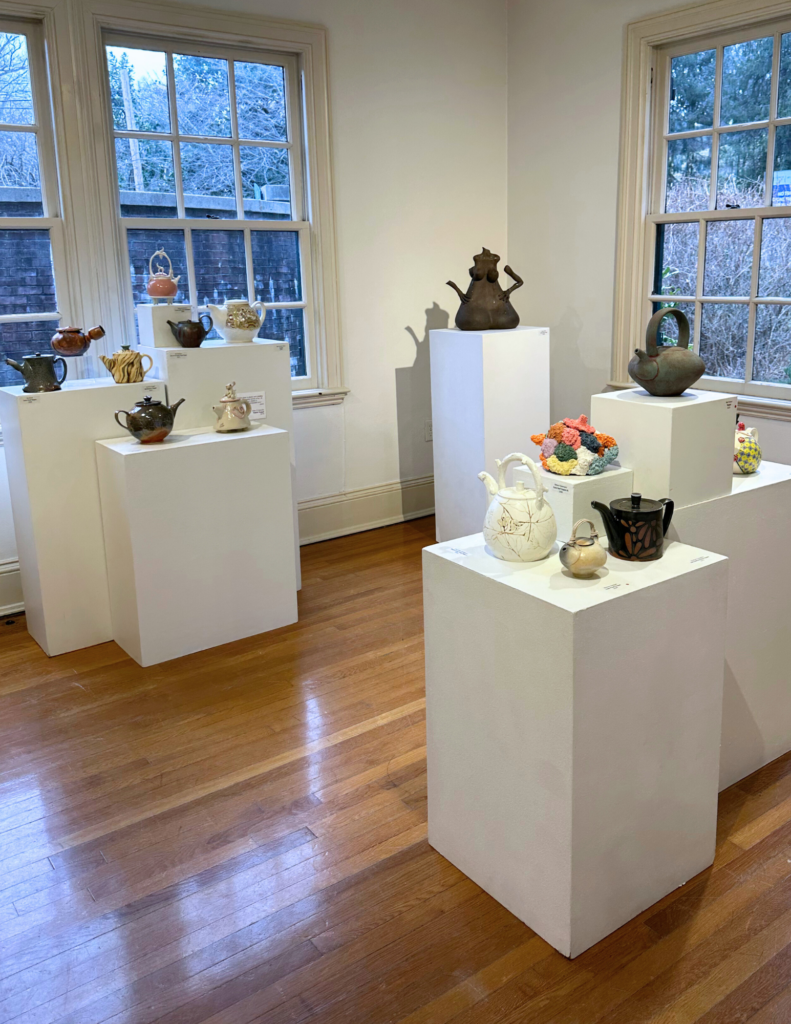
Also on Exhibition
In The Beginning…
A special exhibition honoring the visionary artists who laid the foundation for our organization nearly half a century ago.
Community Arts Winter Showcase
A vibrant exhibition highlighting the talent, curiosity, and creativity of our students, teaching artists, and community partners.