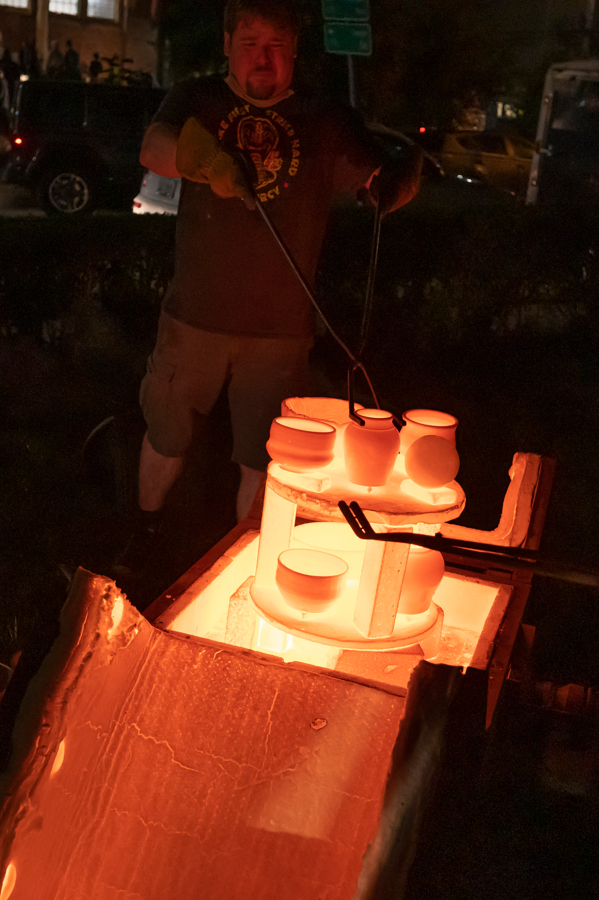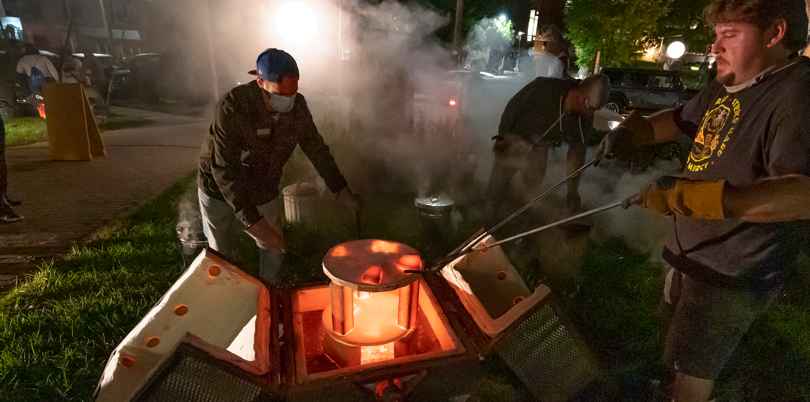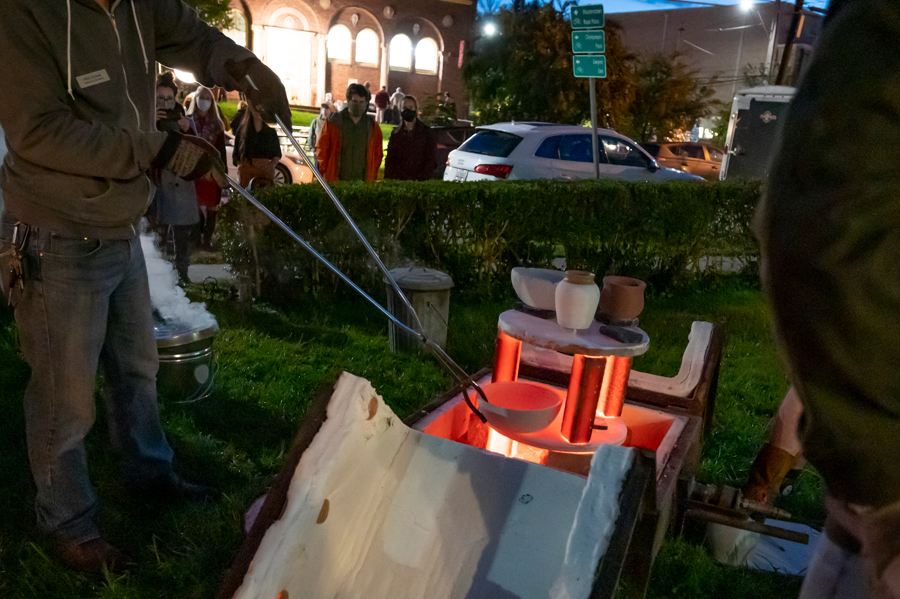

Raku is a kind of earthenware glaze firing process, originally developed for the Japanese tea ceremony in the 16th cent., when a bisqued pot is heated, in this case to 1650°F (899°C) and removed from the heat, transferred to combustibles and smoldered, leaving a blackened, distinctively variegated or lustrous pattern.
About the Processes
Raku is a low-temperature ceramic firing technique originally developed in Japan in the 16th century for the tea ceremony. This process blends speed, fire, and chemistry to create pottery with bold surfaces and unpredictable beauty.
Before firing, pottery is first bisque-fired and then glazed using special low-melting raku glazes. The clay bodies used for raku are formulated to withstand extreme temperature changes.
The glazed pieces are carefully loaded into a raku kiln and heated. In about an hour, the kiln reaches approximately 1650°F or roughly 900°C—when the glazes become molten.
At this point, the pottery is pulled from the kiln while glowing red-hot.
The hot pieces are immediately transferred into metal containers filled with combustible materials like sawdust, newspaper, or straw. The extreme heat causes the materials to ignite instantly.
A lid is placed over the container to cut off oxygen, creating a smoky environment known as a reduction atmosphere. This reduction causes glaze surfaces to crackle and develop metallic lusters, while any exposed clay absorbs carbon, turning rich black.
After about thirty minutes, or once the desired effects are achieved, the pieces are cooled to stop the chemical reactions and set the final surface.
The result is pottery defined by dramatic crackles, iridescent lusters, and carbonized patterns—each piece shaped by flame, smoke, and spontaneity.